Running low on CO2 for your favorite soda maker or homebrewing setup can be a frustrating experience, often leading to a sudden halt in your carbonation adventures. The quest for a quick, cost-effective solution has led many enthusiasts to explore a controversial DIY method: refilling CO2 tanks using dry ice. This “hack” promises convenience and savings, but it comes with significant risks that demand a thorough understanding and strict adherence to safety protocols. This guide delves into the dry ice refill method, providing a step-by-step process, essential safety precautions, and a candid look at whether this popular DIY trick is truly worth the potential dangers.
Why Consider Refilling Your CO2 Tank with Dry Ice?
For many, the appeal of the dry ice CO2 tank refill hack stems from practical concerns. Whether you’re an avid soda maker user, a homebrewer with a kegerator, or someone who uses CO2 for other applications, running out of gas can disrupt your routine. Professional CO2 refills or tank exchange programs aren’t always conveniently located, and the costs can add up over time. The idea of buying readily available and relatively inexpensive dry ice to replenish your tank at home holds a strong attraction, offering a seemingly simple solution to keep your carbonation flowing without interruption or frequent trips to a specialty supplier.
Understanding the Science and Risks of the Dry Ice Method
The dry ice refill method leverages the fundamental properties of carbon dioxide. Dry ice is simply solid CO2, existing at an extremely cold temperature of around -109.3°F (-78.5°C). When dry ice warms, it undergoes a process called sublimation, transforming directly from a solid into a gas without passing through a liquid phase. This conversion is the core of the hack: you’re essentially putting solid CO2 into your tank, allowing it to warm up and become the gaseous CO2 you need.
However, this process is inherently dangerous due to the massive volume expansion that occurs during sublimation. A small piece of dry ice will convert into a large volume of CO2 gas, building up immense pressure inside a sealed container like a CO2 tank. Exceeding the tank’s rated pressure capacity can lead to catastrophic failure, including the tank rupturing or exploding, posing severe risks of injury or even death. Furthermore, handling dry ice directly can cause severe frostbite due to its extreme cold. The release of large amounts of CO2 gas in an enclosed space also presents an asphyxiation hazard, as CO2 is heavier than air and can displace oxygen, leading to suffocation.
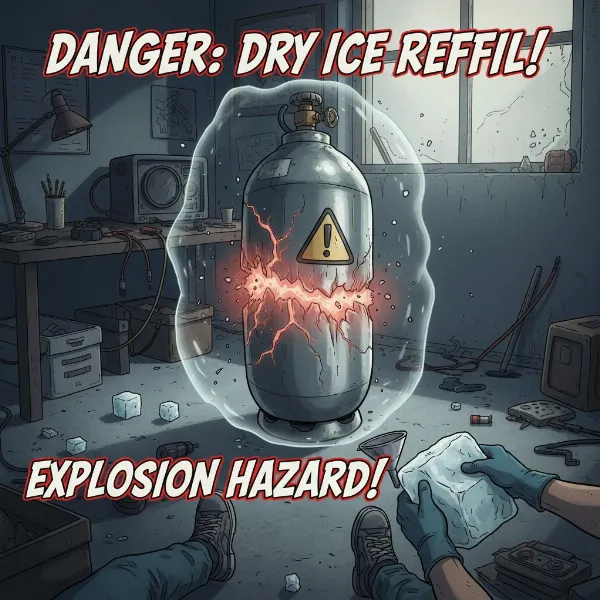 Illustration showing a CO2 tank potentially over-pressurized due to dry ice sublimation, emphasizing danger.
Essential Safety Gear and Precautions for the Dry Ice Hack
Attempting the dry ice CO2 refill hack without proper safety measures is extremely reckless. Prioritizing safety is paramount to mitigate the significant risks involved.
Non-negotiable Safety Equipment
|
Our Picks for the Best Soda maker in 2026
As an Amazon Associate I earn from qualifying purchases.
|
||
| Num | Product | Action |
|---|---|---|
| 1 | Mysoda Ruby 2 Sparkling Water Maker - Soda Streaming Machine Silent Carbonated Water Machine Robust Long-Lasting Aluminium Soda Maker 1L Water Bottle Without CO2 Cylinder - Black Copper Soda Machine |

|
| 2 | Ninja Thirsti Drink System, Soda Maker, Create Unique Sparkling and Still Drinks, Personalize Size and Flavor, Carbonated Water Machine, 60L CO2 Cylinder, Variety of Flavors, Color Black (model 1001) |
|
| 3 | Philips Soda Streaming Machine, Stainless Sparkling Water Maker Easy Install with Quick Twist 1L PET Carbonating Bottle, Soda Maker Compatible with 60L CO2 Carbonator (NOT Included), ADD4902BKOQ/37 |
|
| 4 | Soda Siphon 1L,Portable Sparkling Water Maker,Compact Carbonated Water Machine for Flavored Drinks Reusable Beverages Machine Kit,Travel Soda Machine for Home & Outdoor |
|
| 5 | SodaStream Terra Sparkling Water Maker Bundle in Black - includes 3-Pack CO2 and Carbonating Bottle |
|
| 6 | SodaStream - Terra Sparkling Water Maker - VALUE BUNDLE - CQC CO2 system - Includes 2x CO2 Cylinders, 3x 32 Fl Oz Dishwasher Safe Bottles, 2x Bubly Flavor Drops - Combine with Pepsi Flavors - Black |
|
| 7 | Philips Sparkling Water Maker ADD4901BKOQ/37, Plastic Soda Streaming Machine with Quick Twist Bottle, 1L BPA free PET Carbonating Bottle, Soda Maker Compatible with 60L CO2 Carbonator (NOT Included) |
|
| 8 | Black Stainless Steel Sparkling Water Maker Soda Machine Includes 1L Stainless Steel Black Bottle and 1 C02 Cylinder |
|
| 9 | Philips Sparkling Water Maker, Soda Streaming Machine with Quick Twist Bottle, 1L BPA free PET Carbonating Bottle, Soda Maker Compatible with 60L CO2 Carbonator (NOT Included), ADD4902BKOQ/37 |
|
| 10 | SodaStream - Terra Soda Streaming Machine - STARTER KIT - Sparkling Water Maker with CO2 & Bubly Drop - Eco-Friendly, No Batteries Needed - Black |
|
Always wear thick, insulated gloves (like cryogenic or heavy-duty leather gloves) to prevent frostbite from direct contact with dry ice. Full-face eye protection or safety glasses are crucial to shield your eyes from any potential flying debris or CO2 vapor. Wearing long sleeves, pants, and closed-toe shoes is also recommended to protect exposed skin.
Workspace Requirements
Perform this entire operation in a well-ventilated area, preferably outdoors or in a garage with open doors. Never attempt this in an enclosed space like a basement, small room, or vehicle, where CO2 gas can accumulate and displace oxygen, leading to unconsciousness or asphyxiation. Ensure constant airflow throughout the process.
Tank Integrity Check
Before you begin, thoroughly inspect your CO2 tank for any signs of damage, dents, rust, or compromised valves. A damaged tank is far more susceptible to failure under pressure and should never be used for refilling. Only use tanks that are currently in certification and free of any visible defects.
Understanding Tank Capacity
One of the gravest dangers is overfilling. CO2 tanks are designed for a specific weight capacity of liquid CO2, not dry ice. You must use a reliable scale to accurately measure the dry ice and ensure you never exceed 60-65% of the tank’s maximum liquid CO2 capacity by weight. Overfilling can lead to dangerously high pressures as the dry ice converts to gas, making the tank a ticking time bomb.
“While the dry ice method can seem appealing for its cost-effectiveness, the potential for serious injury or equipment damage makes it a high-risk endeavor that requires extreme caution and a thorough understanding of gas pressure dynamics.” – Dr. Eleanor Vance, Chemical Safety Expert
Step-by-Step: The Dry Ice CO2 Tank Refill Process
If, after considering the risks, you decide to proceed with the dry ice method, follow these steps meticulously.
Gather Your Tools
You will need:
- Dry ice: Purchased from a specialty supplier or grocery store. Ensure it’s fresh and in block or pellet form.
- Sturdy funnel: Large enough to accommodate dry ice pieces and fit snugly into the tank opening.
- Digital scale: Accurate to at least a few grams, capable of weighing your full CO2 tank.
- Pliers or wrench: To safely open and close your CO2 tank’s valve.
- Small hammer or mallet: For breaking dry ice blocks.
- Insulated cooler: To store dry ice safely during the process.
- All required safety gear: Insulated gloves, eye protection, long clothing.
Prepare Your CO2 Tank
First, ensure your CO2 tank is completely empty and depressurized. Slowly open the valve to release any residual gas. For optimal results, cool the empty tank in a refrigerator or freezer for a few hours prior to loading. A colder tank helps slow the sublimation process, giving you more time to work safely.
Safely Handle and Break Dry Ice
Wearing your insulated gloves and eye protection, carefully remove dry ice from its insulated container. If you have a block, place it inside a sturdy bag (like a canvas bag) and gently break it into smaller pieces using a hammer or mallet. Aim for pieces that are small enough to easily fit through your funnel and tank opening, but not so fine that they sublimate too quickly.
Carefully Load the Tank
Place the funnel securely into the opening of your CO2 tank. Wearing your gloves, carefully drop the dry ice pieces into the funnel, allowing them to fall into the tank. Crucially, regularly weigh the tank on your digital scale as you add dry ice. Refer to the tare weight (empty weight) printed on your tank and add dry ice only up to the calculated weight that represents 60-65% of the tank’s liquid CO2 capacity. Do not guess; precision is vital.
Seal and Monitor
Once the desired weight of dry ice has been loaded, remove the funnel and immediately and securely close the CO2 tank’s valve using your pliers or wrench. Place the refilled tank upright in a safe, well-ventilated area, away from direct sunlight or heat sources. Allow it to slowly warm up to ambient temperature, which will cause the dry ice to sublimate and convert into pressurized CO2 gas. This process can take several hours. Do not shake or agitate the tank. Monitor the tank for any unusual sounds or bulging, which could indicate excessive pressure.
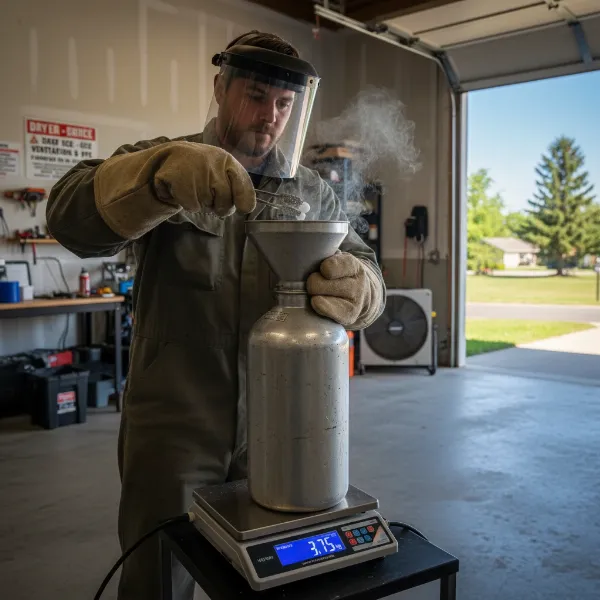 Person wearing safety gear carefully loading dry ice into a CO2 tank using a funnel and scale.
Common Pitfalls and Troubleshooting When Using Dry Ice
Even with careful execution, challenges can arise when using the dry ice refill method.
- Tank not filling properly: This can happen if the dry ice sublimates too quickly before the valve is fully closed, or if the tank is not adequately cooled. Working faster and ensuring the tank is cold can help.
- Overfilling dangers: The most critical pitfall. If you added too much dry ice, the pressure inside will become dangerously high. There is no safe way to immediately reduce this pressure without specialized equipment. If you suspect overfilling, slowly and carefully vent small amounts of gas in a well-ventilated outdoor area while wearing full safety gear. This is extremely risky and should be avoided at all costs by accurate weighing during the filling process.
- Leaks: Leaks typically occur around the valve connection. Ensure the valve is tightly secured and that the O-ring or seal is in good condition. You can test for leaks by applying a soapy water solution around the valve; bubbles indicate a leak.
- Inconsistent carbonation: If the tank isn’t properly filled or the dry ice wasn’t pure, the resulting CO2 might not provide consistent carbonation.
Beyond the Hack: Safer CO2 Refill Alternatives
While the dry ice hack might appeal to the DIY spirit and offer perceived savings, the significant safety risks often outweigh the benefits. Fortunately, there are much safer and more reliable alternatives for keeping your CO2 supply flowing.
- Professional refill services: Many welding supply stores, fire extinguisher suppliers, and even some homebrew shops offer professional CO2 tank refilling services. These facilities have the proper equipment and expertise to safely fill your tank to the correct specifications.
- Tank exchange programs: Popular with soda maker brands and some gas suppliers, exchange programs allow you to swap your empty tank for a full, certified one, often at a reasonable cost. This is generally the most convenient and safest option for consumer-grade tanks.
- Using larger CO2 cylinders: For high-volume users like serious homebrewers, investing in a larger CO2 cylinder (e.g., a 20lb tank) can be more cost-effective and require less frequent refills than smaller soda maker bottles. These larger tanks are typically refilled professionally.
Conclusion: Weighing the Risks and Rewards of the Dry Ice Hack
The dry ice CO2 tank refill hack stands as a testament to ingenuity, offering a seemingly clever way to save money and maintain your carbonation supply. However, it is a method fraught with considerable danger, ranging from severe frostbite and asphyxiation to the catastrophic failure of an over-pressurized tank. While the initial appeal of convenience and cost savings is undeniable, the extreme care, specialized knowledge, and inherent risks involved demand serious consideration. For most users, the safer alternatives—professional refills, tank exchange programs, or larger CO2 cylinders—offer peace of mind and reliability that the DIY dry ice method simply cannot match. Is the marginal cost saving truly worth the potential for grave injury or equipment damage? That critical decision ultimately rests with each individual, but it’s a decision that should always be made with safety as the absolute highest priority.
Frequently Asked Questions
How much dry ice do I need for a 60L CO2 tank?
A 60L soda maker CO2 tank typically holds about 400-425 grams of liquid CO2. To refill with dry ice, aim for 60-65% of this weight, which is approximately 240-275 grams (0.5 to 0.6 pounds) of dry ice. Always use a scale for precise measurement.
Can I use any CO2 tank for this method?
This method is primarily discussed for smaller, consumer-grade CO2 tanks (like those for Soda Makers). However, it is fundamentally risky for any tank not explicitly designed or rated for such a refill method. Always ensure your tank is in good condition and understand its maximum fill weight.
How long does it take for the dry ice to convert to gas?
The conversion time depends on the ambient temperature and the tank’s initial temperature. In a normal room temperature environment, it can take several hours (e.g., 4-8 hours) for the dry ice to fully sublimate and reach equilibrium pressure within the tank.
Is it cheaper to use dry ice than professional refills?
Potentially, yes. Dry ice is generally inexpensive per pound. However, when you factor in the cost of safety equipment, the time involved, and the extreme risks, the perceived savings often become negligible compared to the safety and reliability of professional services or exchange programs.
What are the signs of an overfilled CO2 tank?
An overfilled CO2 tank can show signs such as bulging of the tank walls, an unusual hissing sound from the valve, or feeling excessively cold even after sitting for a while. If you notice any of these signs, immediately evacuate the area and consider the tank a serious hazard.