Do you find yourself constantly reaching for store-bought sparkling water or sugary sodas, only to be disappointed by the waste, cost, or artificial ingredients? The desire for fresh, bubbly drinks at home has led many to discover the transformative power of a soda maker. This comprehensive guide will delve into everything you need to know, from understanding the different types of soda makers to selecting the perfect model, ensuring your journey into home carbonation is both rewarding and refreshing.
What is a Soda Maker and Why is It So Popular?
A soda maker, often referred to as a sparkling water maker, is a kitchen appliance designed to carbonate plain tap water or other liquids by injecting carbon dioxide (CO2) gas. This simple yet ingenious device allows users to transform ordinary water into refreshing fizzy drinks in a matter of seconds. The core function involves a CO2 cylinder that releases gas into a specialized bottle containing water, creating the beloved bubbles.
The concept of home carbonation isn’t entirely new, with early iterations existing for decades, but modern soda makers have revolutionized the experience with sleek designs, user-friendly mechanisms, and enhanced efficiency. Today, they are enjoying a surge in popularity, driven by several key trends. People are increasingly conscious of their health, opting for unsweetened sparkling water over sugary sodas. The convenience of having freshly carbonated drinks on demand, without trips to the store, is another major draw. Furthermore, the environmental benefit of significantly reducing single-use plastic bottles aligns perfectly with a growing eco-conscious lifestyle.
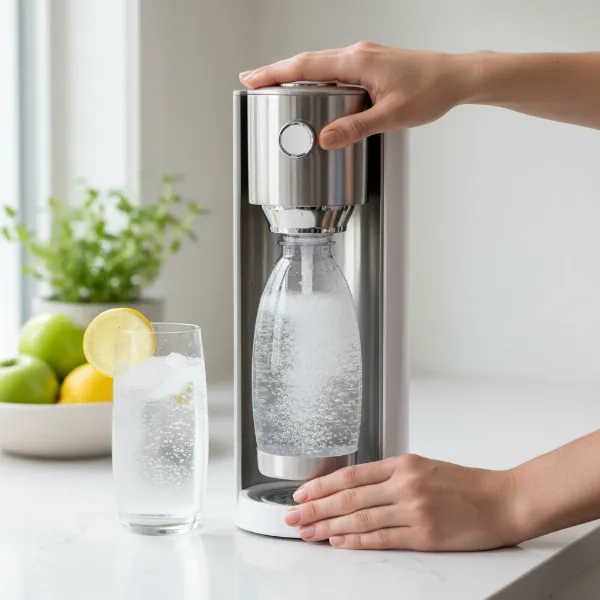 A person making sparkling water at home with a modern soda maker on a kitchen counter
Popular Types of Soda Makers on the Market
The world of soda makers offers a variety of designs and functionalities, catering to different needs and preferences. Understanding these types is crucial for making an informed choice.
Manual Soda Makers
Manual soda makers are the most common type, known for their simplicity and often requiring no electricity. Users typically attach a water bottle, then press a button or push a lever multiple times to inject CO2 until the desired fizziness is achieved.
- Pros: Generally more affordable, cordless operation allows for placement anywhere, often durable with fewer electronic parts, provides precise control over carbonation levels. Many appreciate the tactile feedback and control over the bubble intensity.
- Cons: Requires manual effort, carbonation consistency can vary based on technique, some models might require screwing in bottles which can be slightly lengthier.
- Ideal for: Budget-conscious users, those who prefer hands-on control, kitchens with limited power outlets, or anyone seeking a straightforward, reliable device. Examples include models like the SodaStream Art or Terra.
Electric Soda Makers
Electric soda makers streamline the carbonation process with automated features. These models plug into an outlet and often feature pre-set carbonation levels or “one-touch” operation, making them incredibly user-friendly.
- Pros: Effortless operation with consistent carbonation every time, ideal for those who prefer convenience and speed, some offer multiple fizz levels at the touch of a button.
- Cons: Requires a power outlet, typically more expensive than manual counterparts, fewer options for fine-tuning carbonation beyond pre-sets.
- Ideal for: Tech-savvy users, those who value maximum convenience and consistent results, and households with a high demand for sparkling water. The SodaStream One Touch is a prime example.
Mini/Portable Soda Makers
While most soda makers are designed for countertop use, some compact or even battery-operated versions cater to portability. These are often smaller, lighter, and designed for easy transport or for those with minimal kitchen space.
- Pros: Space-saving, convenient for small apartments or travel, usually simple to operate.
- Cons: May have smaller bottle capacities, potentially less robust carbonation systems than full-sized models, limited features.
- Ideal for: College students, RV owners, campers, or individuals with very small living spaces who still want fresh fizz on the go.
Specialty Soda Makers (e.g., for Restaurants, Bars, or Versatile Use)
Beyond standard water carbonators, some specialized machines offer advanced functionalities. This includes high-capacity systems for commercial use or versatile models that can carbonate any beverage, not just water.
- Pros: Can carbonate a wider range of liquids (juices, wine, cocktails), robust construction, larger CO2 capacity for commercial use. The Drinkmate Sparkling Water and Soda Maker, for instance, is highly praised for its ability to carbonate any beverage, offering unparalleled versatility.
- Cons: Significantly higher price point, larger footprint, potentially more complex operation and maintenance.
- Ideal for: Home mixologists, small businesses, and users who desire to carbonate more than just water, from flat soda to infused beverages.
Comparison of Popular Soda Maker Types
Choosing the right soda maker often comes down to balancing cost, convenience, and features. Here’s a brief comparison to help you weigh your options:
| Feature | Manual Soda Maker | Electric Soda Maker | Versatile Soda Maker (e.g., Drinkmate) |
|---|---|---|---|
| Price Range | Low to Mid | Mid to High | Mid to High |
| Power | No electricity needed | Requires electricity | No electricity needed |
| Ease of Use | Simple, manual presses/lever | One-touch automatic | Simple, manual or semi-automatic |
| Carbonation | User-controlled | Consistent pre-set levels | Can carbonate any liquid |
| Bottle Type | Typically plastic | Often plastic, some glass | Plastic or glass |
| Footprint | Compact to medium | Medium | Medium |
| Durability | High (fewer moving parts) | Moderate (electronics) | High |
| Best For | Control, budget, portability | Convenience, consistency | Experimentation, diverse drinks |
The “best” type largely depends on your personal habits and preferences. For instance, the Aarke Carbonator III is often highlighted for its robust stainless steel build and elegant design, offering a premium manual experience, while SodaStream models like the Art emphasize sleekness and ease of use.
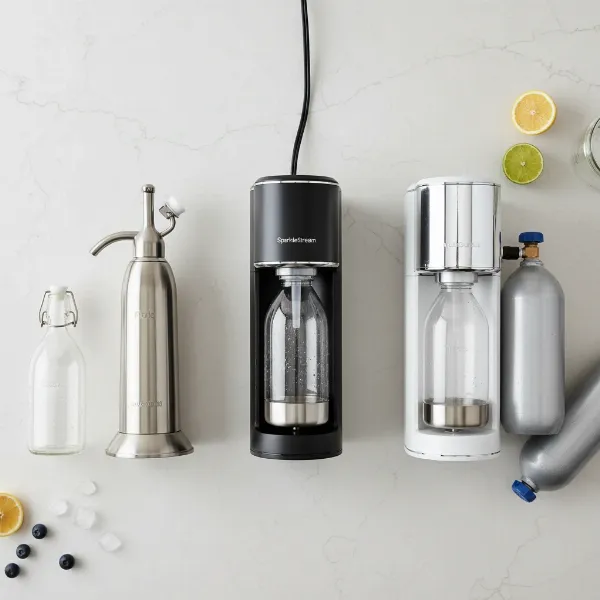 Assortment of different soda makers, including manual, electric, and versatile models, showcasing their unique designs
Your Essential Soda Maker Buying Guide
Navigating the array of soda makers can be daunting. This buying guide will walk you through the key considerations to ensure you select a model that perfectly suits your lifestyle.
1. Identify Your Usage Needs
Before anything else, consider how you intend to use your soda maker.
- Purpose: Are you primarily making sparkling water, or do you want to carbonate other beverages like juices or cocktails? If the latter, a versatile machine like the Drinkmate is essential.
- Frequency: How often will you use it? Daily users might prioritize durability and ease of use, while occasional users might focus on affordability.
- Household Size: A single person might be fine with smaller bottles, but a family will benefit from larger capacity bottles or quicker carbonation times.
2. Determine Your Budget
Soda makers range widely in price, from entry-level options around $80-$100 to premium models costing over $200.
- Entry-level: Typically manual, basic features, plastic construction.
- Mid-range: May include electric options, improved design, some advanced features.
- High-end: Often feature premium materials (like stainless steel), sophisticated design, and potentially specialized functionalities. Remember to factor in the ongoing cost of CO2 cylinders and replacement bottles.
3. Consider the Brand Reputation
Established brands often offer better reliability, customer support, and warranty options. Brands like SodaStream, Aarke, and Drinkmate are well-regarded in the market. Researching a brand’s history and customer service policies can save future headaches.
4. Evaluate Key Features
Beyond basic carbonation, various features can enhance your experience:
- Carbonation Levels: Does it offer adjustable fizz levels?
- Bottle Compatibility: Some machines use proprietary bottles, while others might be more flexible. Ensure the bottles are easy to attach and remove.
- CO2 Cylinder Type: Most use standard 60L cylinders, but some may have unique connections. Check for availability and ease of refilling in your area.
- Safety Features: Look for automatic pressure release valves or secure bottle locking mechanisms.
5. Prioritize Material and Design
The construction material impacts both durability and aesthetics.
- Plastic: Lighter, often more affordable, but may feel less premium.
- Metal (Stainless Steel): More durable, often associated with high-end designs like the Aarke Carbonator III, but also heavier and more expensive.
- Aesthetics: Choose a design that complements your kitchen decor. Some models, like the SMEG Soda Maker, are prized for their vintage appeal.
6. Read User Reviews
Online reviews provide invaluable insights into real-world performance, common issues, and user satisfaction. Pay attention to comments regarding carbonation consistency, ease of cleaning, and durability. Look for recurring themes, both positive and negative.
Top Soda Makers Favored by Enthusiasts
While the specific “Arinter Soda Maker” may not be widely known, the market abounds with excellent choices. Here are some of the most popular and highly-rated soda makers that consistently deliver a superb home carbonation experience:
-
SodaStream Art Sparkling Water Maker:
- Description: A manual model praised for its sleek design and simple lever operation. It offers a premium feel without being fully electric.
- Pros: Ergonomic lever, stylish appearance, consistent carbonation with manual control, no electricity needed.
- Cons: Uses proprietary Quick Connect CO2 cylinders, plastic build.
- Why it’s popular: Combines elegance with straightforward functionality, making it a favorite for many households.
-
Aarke Carbonator III Sparkling & Seltzer Water Maker:
- Description: A design-focused, manual soda maker crafted from high-quality stainless steel, offering a luxurious experience.
- Pros: Exceptional build quality, beautiful minimalist design, durable metal construction, consistent performance.
- Cons: Higher price point, requires more presses for higher fizz, no CO2 canister included.
- Why it’s popular: For those who prioritize aesthetics and build quality, the Aarke is a statement piece that also performs reliably.
-
Drinkmate Sparkling Water and Soda Maker:
- Description: Unique in its ability to carbonate any beverage, not just water, this machine opens up a world of possibilities for custom fizzy drinks.
- Pros: Unmatched versatility (carbonates water, juice, wine, cocktails), sleek design, no electricity required, compatible with various CO2 cartridges.
- Cons: Some users report minor leaking if the bottle isn’t removed carefully, plastic build.
- Why it’s popular: Its “any beverage” carbonation feature sets it apart, appealing to experimentalists and those wanting more than just sparkling water.
-
SodaStream Terra Sparkling Water Maker:
- Description: An entry-level yet highly effective manual soda maker, known for its consistent fizz and user-friendly design.
- Pros: Easy to operate with simple manual pumps, compact design, affordable, consistently fizzy water.
- Cons: Basic plastic construction, limited features compared to higher-end models.
- Why it’s popular: An excellent “best overall” choice for most people due to its balance of performance, ease of use, and price.
-
Ninja Thirsti Drink System:
- Description: A more advanced beverage system that not only carbonates water but also allows users to add flavor drops and create various customized drinks.
- Pros: Highly versatile, customizable drink options, integrated flavor dispensing, electric operation for convenience.
- Cons: Higher price, larger countertop footprint, might be overkill for simple sparkling water needs.
- Why it’s popular: Appeals to users who want a complete drink-making station rather than just a carbonator.
How to Use and Maintain Your Soda Maker Correctly
Proper usage and maintenance are key to ensuring your soda maker provides years of refreshing drinks.
Safe Operation Guidelines
Always prioritize safety when operating your soda maker:
- Read the Manual: Each model has specific instructions. Familiarize yourself with them before first use.
- Use Cold Water: Always carbonate cold water for the best results. Cold water absorbs CO2 more efficiently, leading to better fizz.
- Fill to the Line: Never overfill your carbonating bottle beyond the designated fill line. Overfilling can lead to spills and affect carbonation.
- Water Only (Unless Specified): Unless your specific model (like Drinkmate) is designed to carbonate other liquids, only carbonate plain water. Carbonating sugary or flavored liquids in a non-compatible machine can create a messy overflow and damage the device.
- Secure Bottle Properly: Ensure the carbonating bottle is securely attached and locked into place before injecting CO2.
- Don’t Carbonate Empty: Never attempt to carbonate an empty bottle.
Cleaning and Maintenance for Longevity
Regular cleaning and proper storage will extend the life of your soda maker:
- Bottle Cleaning: Wash carbonating bottles regularly with warm water and a mild dish soap. Do not put plastic bottles in a dishwasher unless explicitly stated by the manufacturer, as high heat can damage them. Glass bottles are often dishwasher safe.
- Machine Exterior: Wipe down the exterior of your soda maker with a damp cloth to remove any spills or dust.
- No Abrasives: Avoid using abrasive cleaners or harsh chemicals, which can scratch surfaces or damage components.
- CO2 Cylinder Care: Store CO2 cylinders in a cool, dry place away from direct sunlight and heat. Replace cylinders promptly when empty to ensure consistent fizz.
- Descale (if applicable): If your machine uses water in its internal mechanisms, consult the manual for descaling procedures, typically done with a vinegar solution.
Common Issues and Simple Troubleshooting
Even well-maintained soda makers can encounter minor issues. Here are some common problems and their solutions:
- Not Enough Fizz:
- Ensure the water is cold enough.
- Check if the CO2 cylinder is empty and needs replacement.
- Verify the bottle is properly sealed and attached.
- Increase the number of presses/pumps (for manual models).
- Leaks During Carbonation:
- Check if the bottle is filled above the maximum fill line.
- Ensure the bottle is screwed in or locked correctly.
- Inspect the rubber seal for damage or dirt.
- Machine Not Working (Electric Models):
- Check if it’s properly plugged in and the power outlet is functioning.
- Ensure the bottle is correctly inserted.
- A quote worth considering for reliability: > “Most issues with soda makers are simple fixes, often related to user error or an empty gas cylinder. Don’t assume the worst!” – Jane Doe, Lead Technician at Fizz & Co.
- Difficulty Removing Bottle: Allow excess pressure to release fully before attempting to remove the bottle. Some machines have a specific release mechanism.
Conclusion
Embracing a home soda maker is more than just buying an appliance; it’s adopting a lifestyle of convenience, health, and environmental consciousness. While “Arinter Soda Maker” may pique curiosity, the principles of selecting an excellent carbonation device remain universal. Whether you prioritize the elegant manual control of an Aarke, the effortless automation of an electric SodaStream, or the unrivaled versatility of a Drinkmate, there’s a perfect machine out there to transform your hydration habits. By considering your needs, understanding the types available, and committing to proper care, you’ll ensure a steady supply of invigorating, homemade sparkling beverages.
What kind of fizzy creations will you unleash in your kitchen first?
Frequently Asked Questions
What is the lifespan of a soda maker?
The lifespan of a soda maker can vary significantly based on brand, construction, and usage. High-quality manual models made with durable materials like stainless steel can last 5-10 years or even longer with proper care. Electric models, due to their electronic components, might have a slightly shorter average lifespan, typically 3-7 years, but many users report much longer service.
Can I use any brand of CO2 cylinder with my soda maker?
Generally, no. Most soda makers are designed to work with specific types of CO2 cylinders, often proprietary to the brand. For example, SodaStream uses their own cylinders, sometimes in two versions (screw-in and Quick Connect). Some versatile brands like Drinkmate may offer broader compatibility or adapters. Always check your machine’s specifications.
Is making sparkling water at home cheaper than buying it?
In most cases, yes. While the initial investment in a soda maker and CO2 cylinder exists, the cost per liter of homemade sparkling water is significantly lower than buying bottled sparkling water. You save on the cost of water, bottles, and transportation, making it a very cost-effective and eco-friendly habit in the long run.
Can I carbonate juices or other drinks in a regular soda maker?
Unless your Soda Maker is explicitly designed for carbonating liquids other than water (like the Drinkmate), you should only carbonate plain water. Carbonating sugary or viscous liquids can cause a foamy overflow, create a sticky mess, clog the machine, and potentially damage its internal mechanisms, voiding your warranty.
How do I know when my CO2 cylinder is empty?
You’ll typically notice a significant decrease in the amount of fizz produced, even after multiple presses. The cylinder might also feel lighter. For some models, there might be a change in the sound the machine makes during carbonation, or it might struggle to inject gas. It’s always good to have a spare cylinder on hand.