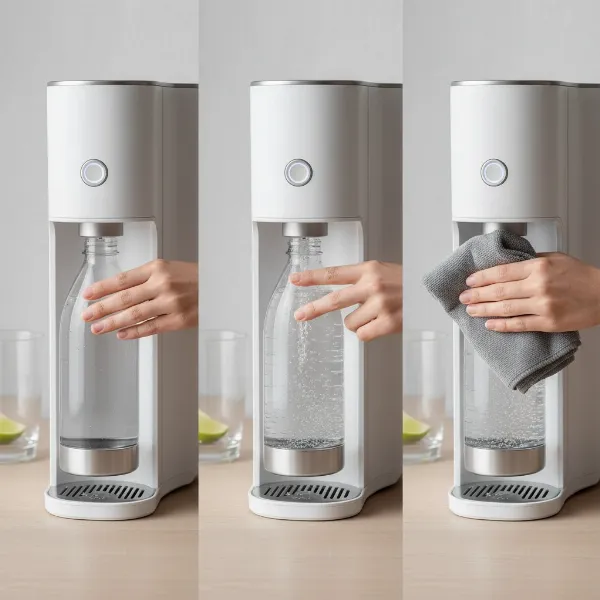
The tantalizing fizz and spicy kick of ginger ale are undeniably refreshing, a classic enjoyed by many. Yet, the commercial versions often come loaded with artificial flavors, excessive sugar, and a list of ingredients that leave much to be desired. But what if you could create a superior, all-natural ginger ale right in your kitchen, precisely to your taste? With a modern soda maker, this culinary adventure is not only possible but surprisingly simple and rewarding. This comprehensive guide will walk you through everything from concocting the perfect ginger syrup to carbonating your way to a delightful, homemade beverage, ensuring every sip is pure, sparkling satisfaction.
What is a Soda Maker and Why is it Perfect for Homemade Ginger Ale?
A soda maker is a convenient countertop appliance designed to transform plain tap water into sparkling water using a CO2 cylinder. Its rise in popularity stems from several key advantages. Beyond the sheer convenience of having instant seltzer on demand, these machines contribute to a more sustainable lifestyle by drastically reducing the need for single-use plastic bottles. Furthermore, they offer significant cost savings over time compared to buying pre-bottled sparkling water or sodas.
For the enthusiast of homemade ginger ale, a soda maker is an invaluable tool. It allows you to produce freshly carbonated water as a base, to which you can add your custom-crafted ginger syrup. This method provides complete control over the ingredients, sweetness, and intensity of the ginger flavor, without the need for fermentation that traditional ginger beer often requires. It’s the fastest and most efficient way to enjoy fresh, bubbly ginger ale whenever the craving strikes.
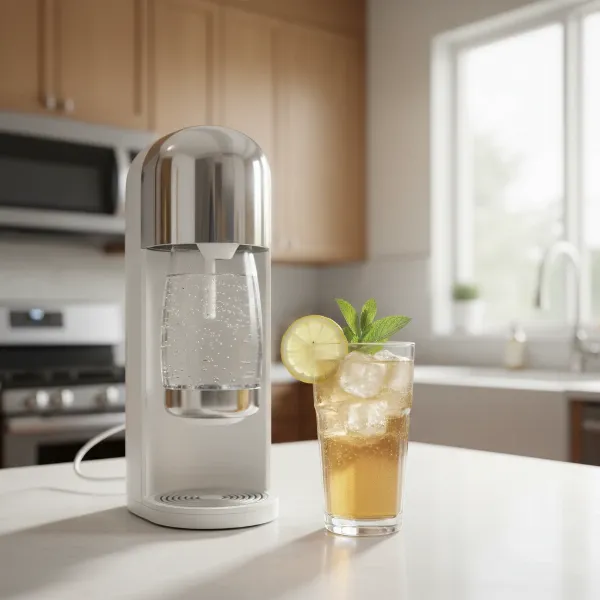 A sparkling glass of homemade ginger ale next to a modern soda maker on a kitchen counter.
Essential Ingredients for Your Homemade Ginger Ale Syrup
The heart of an exceptional homemade ginger ale lies in its syrup. A few simple, fresh ingredients can elevate your drink far beyond anything store-bought.
- Fresh Ginger Root: This is non-negotiable for authentic flavor. Look for firm, smooth ginger with taut skin. You’ll typically peel and then slice, chop, grate, or even juice it, depending on your desired method and the strength of ginger flavor you prefer.
- Sweetener: Granulated sugar is the most common choice, but brown sugar, honey, or maple syrup can add nuanced depth. For those monitoring sugar intake, natural sugar substitutes like stevia can be used, though it’s important to note that powdered stevia can cause excessive foaming if added directly to carbonated water. It’s best incorporated into the syrup.
- Water: Used to extract the ginger’s essence and dissolve the sweetener, forming the syrup base. Filtered water is recommended for the purest taste.
- Citrus (Lemon or Lime): A splash of fresh lemon or lime juice, or even some lemon peel during the simmering process, provides a bright, acidic counterpoint that balances the ginger’s spice and sweetness.
- Optional Spices: To add complexity, consider experimenting with a few whole spices. A hint of cardamom, a few allspice berries, black peppercorns, a star anise pod, or a cinnamon stick can create a unique, gourmet ginger ale experience. A touch of vanilla extract can also round out the flavors beautifully.
“The true magic of homemade ginger ale isn’t just the fizz, but the vibrant, customizable flavor you unlock with fresh ginger and a touch of citrus.” – Chef Anya Sharma, Beverage Innovator
Step-by-Step Guide to Making Ginger Ale Syrup
Creating your ginger ale syrup is a straightforward process that lays the foundation for your delicious, bubbly drink.
- Prepare the Ginger: Begin by peeling your fresh ginger root. A spoon is surprisingly effective for scraping off the skin. Once peeled, you can either thinly slice, chop, or grate the ginger. Grating or finely chopping will yield a stronger, more intense ginger flavor in a shorter amount of time.
- Combine Ingredients: In a medium saucepan, combine your prepared ginger with water, your chosen sweetener (sugar, honey, etc.), and any citrus peel or optional whole spices you wish to include.
- Simmer to Perfection: Bring the mixture to a gentle boil over medium-high heat, stirring until the sweetener is fully dissolved. Once boiling, reduce the heat to a low simmer. Let it simmer for about 5 to 15 minutes. A longer simmer time will create a more concentrated and spicier syrup, while a shorter time results in a milder flavor.
- Steep and Cool: Remove the saucepan from the heat. Allow the ginger mixture to steep as it cools completely to room temperature. This steeping phase is vital as it continues to extract maximum flavor from the ginger and spices. Rushing this step will result in a less flavorful syrup.
- Strain the Syrup: Once the syrup is cool, place a fine-mesh strainer over a bowl or a clean jar. Pour the mixture through the strainer to separate all the solid ginger pieces and spices from the liquid syrup. Press down on the solids to extract any remaining liquid and flavor. Discard the solids, or save them for other culinary uses if desired.
- Store: Transfer your finished ginger ale syrup into a clean, airtight bottle or jar. Store it in the refrigerator. Properly stored, homemade ginger ale syrup typically lasts for 1 to 2 weeks, though some recipes can last longer.
Carbonating Your Water with a Soda Maker
The key to perfectly fizzy homemade ginger ale lies in understanding how to use your soda maker correctly.
The Golden Rule: Always carbonate plain, cold water only in your soda maker. This cannot be stressed enough. Attempting to carbonate water that already has syrup or other flavorings can lead to a messy overflow, damage your machine, and even void its warranty.
The Carbonation Process:
- Chill Your Water: Ensure your water is as cold as possible. Cold water absorbs CO2 more effectively, resulting in a fizzier drink that stays carbonated longer.
- Fill the Bottle: Fill your soda maker bottle with cold, plain water up to the designated fill line.
- Carbonate: Attach the bottle to your soda maker according to the manufacturer’s instructions. Press the carbonation button or lever repeatedly until you achieve your desired level of fizz. Most machines recommend 3-5 presses for standard carbonation.
- Release and Remove: Once carbonated, release any excess pressure and carefully remove the bottle from the machine.
Mixing Your Homemade Ginger Ale
With your freshly made ginger syrup and perfectly carbonated water, you’re just moments away from a delightful beverage.
The ideal ratio is often a matter of personal preference, but a good starting point is usually 1 part ginger syrup to 3-5 parts carbonated water. For example, for a 1-liter bottle of carbonated water, you might start with 1/4 to 1/2 cup of ginger syrup.
Mixing Method:
- Pour your desired amount of cooled ginger ale syrup into a glass.
- Top it off with the freshly carbonated water.
- Gently stir to combine the flavors without losing too much fizz.
- Alternatively, you can carefully add the syrup to the carbonated water bottle after it has been removed from the machine, then gently invert the bottle a couple of times to mix. Avoid shaking vigorously, as this will cause excessive foaming.
- Serve your homemade ginger ale over ice, perhaps with a fresh slice of lemon or lime as a garnish.
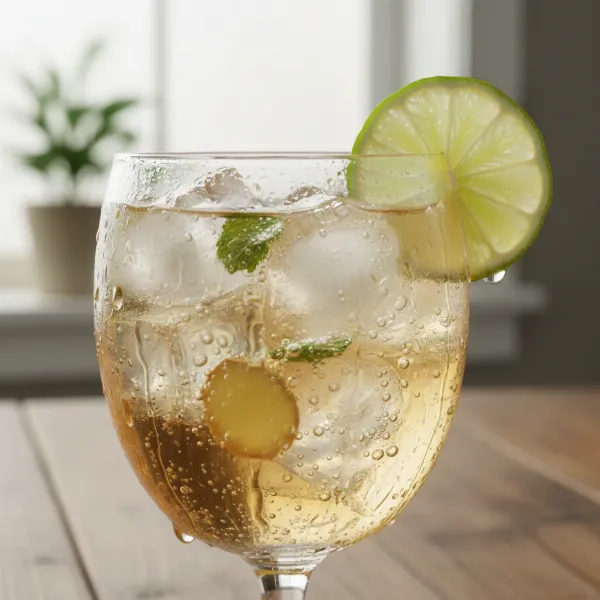 Close-up of a refreshing glass of homemade ginger ale with ice, lemon, and bubbles.
Tips for the Perfect Homemade Ginger Ale and Troubleshooting
Mastering homemade ginger ale is about customization and understanding a few key principles.
- Adjusting Flavor: Don’t be afraid to experiment! For a stronger, spicier ginger kick, use more ginger in your syrup or simmer it for a longer duration. If you prefer a sweeter drink, add a little extra sweetener to your syrup while it’s simmering, or to your glass when mixing. A squeeze of fresh lemon or lime juice directly into your glass can brighten the flavor considerably.
- Spiciness Level: For those who love an extra fiery ginger ale, consider leaving a bit of the peel on some of the ginger when making the syrup, or even adding a tiny pinch of cayenne pepper to the syrup mixture while simmering.
- Syrup Storage: Always keep your homemade ginger syrup in an airtight container in the refrigerator. While it can last up to two weeks, for the freshest taste, it’s best consumed within one week.
- Preventing Foaming: The most common issue when making homemade carbonated drinks is excessive foaming. This is almost always due to adding syrup before carbonating, or adding non-cold syrup to cold carbonated water. Ensure your syrup is fully chilled before mixing and always carbonate plain, cold water first.
- Experimentation: The beauty of homemade is the freedom to customize. Try adding other ingredients to your syrup like mint leaves, lemongrass, or a slice of jalapeño for unique flavor profiles.
Comparison: Homemade vs. Store-Bought Ginger Ale
Choosing between homemade and store-bought ginger ale reveals clear advantages for the home concoction.
| Feature | Homemade Ginger Ale | Store-Bought Ginger Ale |
|---|---|---|
| Flavor | Fresh, vibrant, customizable, authentic ginger taste | Often artificial, can be bland or overly sweet |
| Ingredients | Natural, fresh ginger, controlled sweeteners | May contain high-fructose corn syrup, artificial flavors, preservatives |
| Cost | Initially higher for soda maker, lower per serving | Higher per serving over time |
| Health Control | Full control over sugar content and additives | Limited control, often higher sugar content |
| Environmental Impact | Reduced plastic waste (reusable bottles) | Contributes to plastic waste (single-use bottles) |
Conclusion
Crafting your own ginger ale from scratch using a soda maker is a delightful journey into flavor customization and conscious consumption. It’s an easy way to enjoy a delicious, healthier, and more eco-friendly beverage that perfectly suits your palate. The process is simple: create a concentrated, flavorful ginger syrup, carbonate plain cold water, and then combine the two for an unparalleled fizzy drink. Say goodbye to artificial flavors and excessive sugars, and hello to the fresh, zesty kick of your very own homemade ginger ale.
Are you ready to discover your signature ginger ale blend?
Frequently Asked Questions
Can I use powdered ginger instead of fresh ginger?
|
Our Picks for the Best Soda maker in 2026
As an Amazon Associate I earn from qualifying purchases.
|
||
| Num | Product | Action |
|---|---|---|
| 1 | Ninja Thirsti Drink System, Soda Maker, Create Unique Sparkling and Still Drinks, Personalize Size and Flavor, Carbonated Water Machine, 60L CO2 Cylinder, Variety of Flavors, Color Black (model 1001) |

|
| 2 | Philips Sparkling Water Maker, Soda Streaming Machine with Quick Twist Bottle, 1L BPA free PET Carbonating Bottle, Soda Maker Compatible with 60L CO2 Carbonator (NOT Included), ADD4902BKOQ/37 |
|
| 3 | SodaStream - Terra Sparkling Water Maker - VALUE BUNDLE - CQC CO2 system - Includes 2x CO2 Cylinders, 3x 32 Fl Oz Dishwasher Safe Bottles, 2x Bubly Flavor Drops - Combine with Pepsi Flavors - Black |
|
| 4 | Philips Sparkling Water Maker ADD4901BKOQ/37, Plastic Soda Streaming Machine with Quick Twist Bottle, 1L BPA free PET Carbonating Bottle, Soda Maker Compatible with 60L CO2 Carbonator (NOT Included) |
|
| 5 | SodaStream Terra Sparkling Water Maker Bundle in Black - includes 3-Pack CO2 and Carbonating Bottle |
|
| 6 | Black Stainless Steel Sparkling Water Maker Soda Machine Includes 1L Stainless Steel Black Bottle and 1 C02 Cylinder |
|
| 7 | Mysoda Ruby 2 Sparkling Water Maker - Soda Streaming Machine Silent Carbonated Water Machine Robust Long-Lasting Aluminium Soda Maker 1L Water Bottle Without CO2 Cylinder - Black Copper Soda Machine |
|
| 8 | Philips Soda Streaming Machine, Stainless Sparkling Water Maker Easy Install with Quick Twist 1L PET Carbonating Bottle, Soda Maker Compatible with 60L CO2 Carbonator (NOT Included), ADD4902BKOQ/37 |
|
| 9 | SodaStream - Terra Soda Streaming Machine - STARTER KIT - Sparkling Water Maker with CO2 & Bubly Drop - Eco-Friendly, No Batteries Needed - Black |
|
| 10 | Soda Siphon 1L,Portable Sparkling Water Maker,Compact Carbonated Water Machine for Flavored Drinks Reusable Beverages Machine Kit,Travel Soda Machine for Home & Outdoor |
|
While fresh ginger is highly recommended for the most authentic and robust flavor, you can use powdered ginger in a pinch. Start with a smaller amount, like 1 teaspoon for a syrup batch, as its flavor is more concentrated. However, for the best results, always opt for fresh ginger root.
How long does homemade ginger ale syrup last?
Homemade ginger ale syrup, when stored in an airtight container in the refrigerator, typically lasts for 1 to 2 weeks. For optimal freshness and flavor intensity, it’s best to consume it within the first week.
What’s the main difference between ginger ale and ginger beer?
Traditionally, ginger beer is a fermented beverage, giving it a stronger, spicier ginger flavor and sometimes a cloudier appearance, along with a slight alcoholic content from fermentation. Ginger ale, especially homemade with a soda maker, is usually a syrup mixed with carbonated water, offering a lighter, cleaner, and often sweeter profile without fermentation.
Is it safe to carbonate syrup directly in my soda maker?
No, it is never safe to carbonate syrup or any liquid other than plain water directly in a soda maker. Doing so can cause violent foaming, potentially damaging your machine, creating a messy overflow, and even posing a safety risk due to pressure buildup. Always carbonate cold, plain water first, then add your syrup.